
Working with my father, Edward Shahda, over the years has been one of the most meaningful and personal projects of my career. As both his son and a professional photographer, I had the unique opportunity to accompany his artistic journey and provide him with everything an artist might need in terms of documentation, presentation, and digital presence.


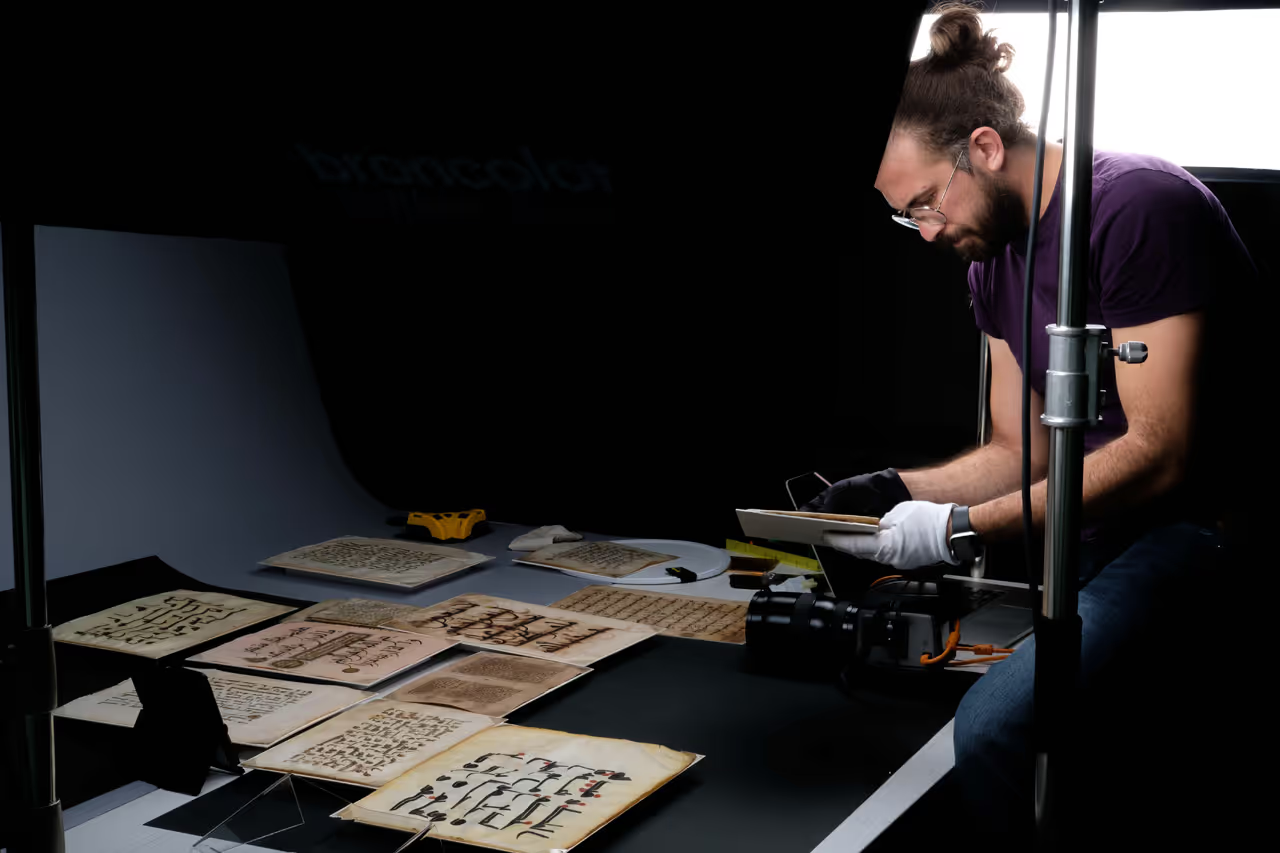
My involvement went far beyond traditional art photography. I began by digitizing his entire artwork, using high-resolution imaging techniques to preserve the texture, colors, and details of each painting. This meticulous process ensured that each piece from large canvases to delicate works on paper—was accurately archived for exhibitions, publications, and on his personal website.


In the beginning it was the word.
the word became equivalent to death.
Three of the martyrs of opinion I chose to represent thousands of martyrs of the word: Christ, Al-Hussein bin Mansour Al-Hallaj, and Ghailan Al-Dimashqi Al-Qubti.
These three died to defend the word...opinion.
They did not carry a weapon, but a word.
Edward Shahda.

Example of the Photography & Archiving Methodology
For this project, one of Edward Shahda's paintings was digitized using ultra-high-resolution panoramic imaging, producing a final file of over 800 megapixels. Advanced imaging techniques and professional color calibration were used to faithfully preserve every brushstroke, texture, and subtle detail of the work.
The process extended beyond the painting itself. Preparatory sketches and studies were carefully documented, alongside photographs of the artist with the artwork. Together, these elements create a more personal archive—one that preserves not only the finished painting, but also the creative journey, the hand of the artist, and the story behind the work.


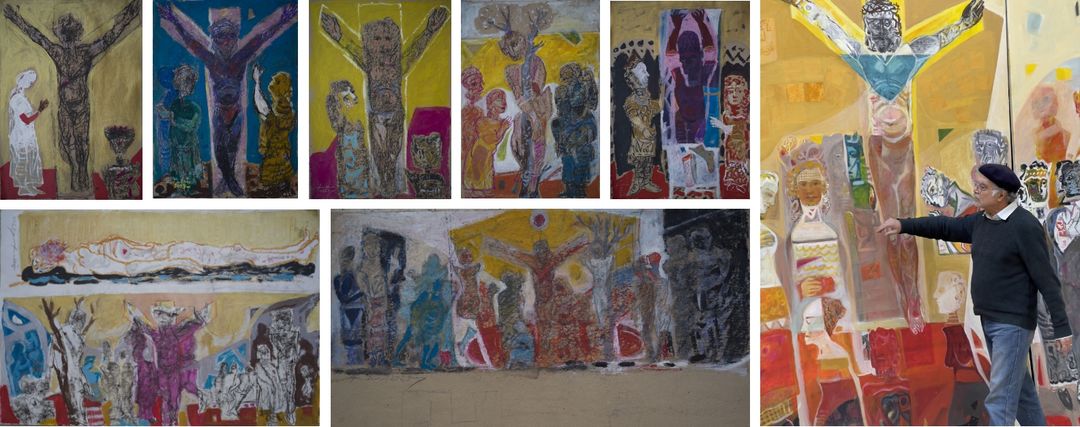


Through advanced imaging, Girl in the Mirror reveals details often missed by the eye alone. Subtle brushstrokes, layers of paint, surface textures, and the different materials used in the artwork become visible, offering a more intimate understanding of Edward Shahda's creative process and the richness of the painting itself.


Panoramic portrait of Edward Shahda, which is formed by three main elements the portrait, the place, and the artistic creations. Each image is an attempt to encapsulate some of the artistic phases presented by Edward Shahda


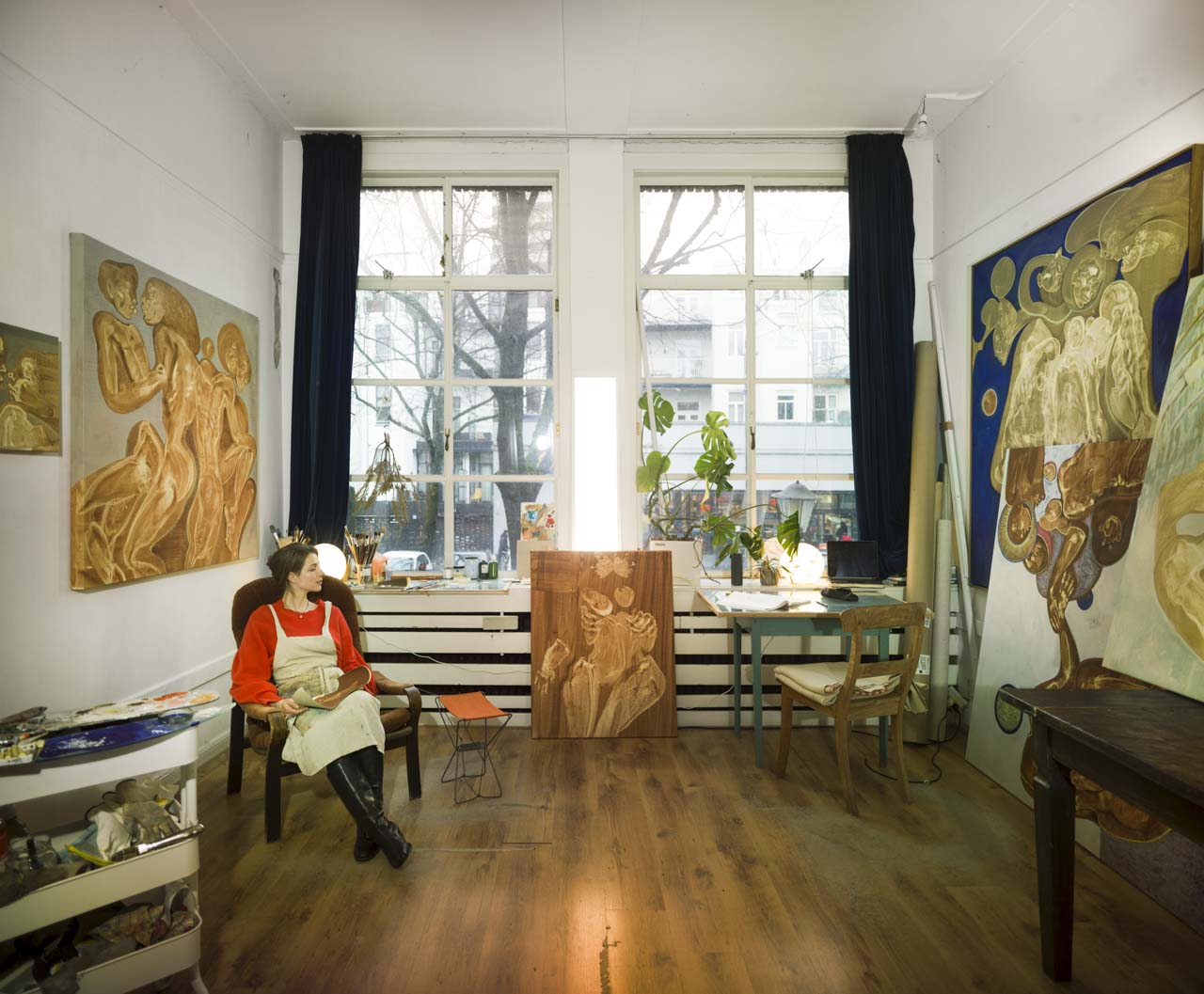
To delve deeper into the story of Shahada's world, I photographed his studio and his 300 year old home in Damascus old town, as well as the environments that shaped his practice. These photographs were not only visual documentation but also a reflection of the close relationship between the artist and his space.


I am working on a special website and video series about Edward Shahda.
Want to know when it's ready? Just drop your email below!
This case study highlights a comprehensive approach to supporting artists through specialized services, including high-quality digitization, visual identity development, and digital strategy.In the case of Edward Shahda, the project evolved beyond documentation into an archival process that captures the essence of a prolific artistic journey.As a personal and long-term endeavor, this is an ongoing project committed to preserving and presenting his legacy to future generations with the highest professional standards.






Photographer & Art Digitization Specialist
Documenting and photographing art, antiquities, collectibles, and contemporary designs.

Services are provided by Quest Imaging, a registered company in Amsterdam since 2019, specializing in high-end photography and digitization.
© Copyright 2025 George Shahda
All images and media on this website are protected by international copyright laws. Any unauthorized use, reproduction, or distribution is strictly prohibited without prior written permission.


.svg)


